
Menu
· Elizabeth De Young
After six years with no solo album, Phoebe Bridgers returns to reclaim her melancholic crown with “Lost Weekend.” Bridgers’s last studio album, “Punisher,” solidified the singer-songwriter as the face of sorrowful indie-folk sound. Her complex lyricism and haunting vocals have always created a deep resonance within the listener; there is an understanding that sadness isn’t merely a phase, it’s an intrinsic part of being human.
In anticipation of the release of “Lost Weekend,” Bridgers released the single “Lost Boys” - invoking fantastical imagery like that of “Peter Pan,” but its lyrics ultimately aimed to take a crack at the current economic and political state of society. Now with a more developed tone, she can utilize spellbinding metaphors and references that simultaneously feel personal, yet universal to current power imbalances.
While “Lost Boys” is one of the more upbeat tracks of the 16 on the new album, the silver-haired singer thrives on indulging in her sadness through her music. Many Phoebe fans were anticipating a devastating listening experience in the best way when the album’s collaborators were announced. Some were expected - like longtime Boygenius collaborators Lucy Dacus and Julien Baker - while others speak to Bridgers’s evolution: Bo Burnham, Cameron Winter (aka Son John-Johnson) and Alex G.
“Lost Weekend” still maintains a mellow vibe throughout, but differs from Bridgers’s past works with the addition of more electronic instrumentation and subject matter. In both “Stranger in the Alps” and “Punisher,” Bridgers writes primarily about her own experiences - usually revolving around past and present relationships. However, her 3rd studio album sets itself apart by being primarily about her going through the process of grieving her father. This album isn’t the first time Bridgers has expressed her feelings about the complicated relationship she had with her father; in her song, “Kyoto,” Bridgers writes about her father’s addiction to alcohol, along with his absenteeism.
Despite the complexities surrounding their relationship, Phoebe formally posted something about his passing early in 2023. “Lost Weekend” contains multiple songs referencing her father, but most notably the track “Never Going Back!” features a voice message from Bridgers’s dad at the end of it.
An unfortunate part of growing up and getting older is losing loved ones. Bridgers acknowledges this transition and emotional weight with grace and tact. She also doesn’t shy away from the contradictory emotions that arise when going through the stages of grief that never truly end. Even musically, Bridgers merges her typical dark folk tone with more electronic sound - combining two unlikely genres into something more intense.
The musicality of the album not only helps to translate the grief, but it’s also a significant evolution seen in Bridgers’s career. She has always been known for her clever yet sorrowful lyricism that pairs well with her warm and enchanting vocals; however, “Lost Weekend” shows audiences that Bridgers is expanding her sound. While ranking the tracklist, we’ll touch on what stands out from each song.

#16) Lost Parade
The only fully instrumental track of the album, “Lost Parade” reimagines the melody from “Graceland, Too” as a faded memory. Its placement towards the end of the tracklist, between “Other Plans” and “I Can’t Wait,” positions the song as a glimpse over the shoulder of Bridgers - recognition of how far she’s come in the past 6 years.
Part of the chorus from “Graceland, Too” reads: “She can do anything she wants to/She can do whatever she wants to do/She could go home, but she's not going to.” The melody’s revitalization on “Lost Weekend” might serve to say that she can still do what she pleases, but maybe it’s time to return home.
#15) Panorama
While “Panorama” only has five lines of lyrics, they work quickly to paint a scene. There is an internal conflict occurring, one in which Bridgers wants to look forward, but cannot escape what’s behind her. The last lyric, “If you’re drinking, then I’m drinking,” is taken directly from Jake Minch’s “Twice,” and Minch is even credited on the song.
The lyrics aren’t even the most moving part; rather, the steady build-up of sound via a mix of banjo, acoustic guitar and synthesizer aids in creating the sonic structure of the hotel room. The room is more of a place of the mind; however, one where it’s easy to look out, but still feel cluttered and trapped within.
#14) Other Plans
A majority of “Lost Weekend” focuses on how adulthood is mostly coping with what the world throws at you as best you can - “Other Plans” sums up that sentiment perfectly when it comes to romantic relationships. Bridgers’s raw vocals on this track seep into the listener, leaving them vulnerable.
Vulnerability can sometimes feel like a weakness; there’s a hesitancy to let someone in, to stay. “Other Plans” encapsulates the terror that comes with a new love. It’s easier to go in with the mindset that you can always leave, but it's when you want to stay that it really starts to feel scary.
#13) The Outside
Serving as the opening track to the album, “The Outside” perfectly blends the classic Phoebe tone with her new, more electronic-based sound that she utilizes throughout the album. It allows the listener to ease into the experience, not immediately jumping into gut-wrenching lyrics - unlike her first album “Stranger in the Alps,” which begins with “Smoke Signals.”
Bridgers relates this song to her experience with dissociation growing up; the ability to muffle the world, becoming a silent observer, can serve as a protection, but it also prevents one from really living. By calling it out, Bridgers gives recognition to her past without critique, but signals that she is ready to move forward, inward.
#12) Never Going Back!
Potentially one of the most emotionally devastating tracks on the album, “Never Going Back!” begins with an upbeat rhythm, only to fade out into an old voicemail from Bridgers’s dad. It’s easy to look back, but it’s hard to comprehend the changes. “You’re everywhere, dude,” her father remarks on the message, calling her a rock star - but how did she go from indie music darling to phenomenon Phoebe Bridgers?
There isn’t a sense of regret in the song, just a passive acknowledgement that things can’t be the same. Despite all the struggles and complications that life brings, one has to march on regardless. The track ends with Bridgers’s father saying, “Anyway, give me a call if you get a chance. Love you.” Whether or not she ever returned the call isn’t what gives the song meaning; it’s the frozen moment in time of when she had the opportunity to call that does.
#11) Lost Weekend (Reprise)
In a callback to repeated imagery in “Punisher,” Bridgers recalls “the dead bird” that can serve as a gift or a reminder, but now it will serve nothing.
Maybe this serves as Bridgers’s return phone call to her father. It’s simultaneously a goodbye and a reassurance that she’ll never truly leave again. For better or worse, we owe part of our outlook and personalities to our parents; Phoebe doesn’t want to forget the effect her childhood had on her.
Love doesn’t fade with the passage of time, not when someone is there to keep the memory alive.
#10) Lost Boys
We’re all fighting our own battles. Some of them span generations or across the globe, but how we cope with these challenges speaks to our character. “Lost Boys” is all about escapism, how we fabricate fantasies to ignore the real issues that plague us.
The song itself is an incredible balance of build-ups and easy letdowns, tied together with a fanfare of horns. The song wears a veil of triumph, but is truly about how Bridgers has seen many men she’s cared for in her life fail to meet the real world. Even so, listeners are allowed to play a little make-believe and claim it as one of Phoebe’s more upbeat numbers.
#9) I Can’t Wait
Bridgers is finally meeting herself in the middle. Instead of trying to fabricate a persona or open herself to the world, she can finally exist as just Phoebe - whoever that is in the moment. The music takes its time to build momentum, not reaching a peak, but plateauing into a pleasant bluegrass melody.
While everyone has people who have forever affected their lives, no one will ever know us as genuinely as ourselves. Self-love is sometimes seen as acceptance of every aspect of oneself, but Bridgers paints it as a constant evolution.
#8) Still Standing
If the voice memo on “Never Going Back!” wasn’t soul-crushing enough, Bridgers utilizes her own words to describe the experience of grieving her father in “Still Standing.” Taking the listener through past stories and present thoughts, the track is soft in tone but has the emotional impact of a sledgehammer. “Still Standing” sounds like an attempt at making peace through music.
While listeners don’t know Phoebe personally, this track resonates like a eulogy in an old church. Often the songwriter uses clever metaphors and references to elude her true feelings and experience, but this track is painfully honest.
#7) Haunted
An incredibly hopeful song for such a heavy album. “Haunted” feels like a look towards the future rather than a lamentation of the past, which a bulk of the album takes up. Everyone has trauma to process and work through, but this work is something that requires constant effort - there is no one-time solution.
There is an effort required in living versus the passiveness of being alive; regardless of what motivates you or the number of attempts it takes, simply attempting to grow is powerful. The inclusion of Lucy Dacus & Julien Baker’s voices on this track solidifies that hope is an easier thing to have when it’s a shared responsibility with loved ones.
#6) Kill Me
Phoebe has never shied away from disclosing her darkest moments shrouded in song; however, “Kill Me” isn’t suicidal ideation; it’s a reckoning. The passage of time will eventually be the death of us all, bleak as it may sound. Bridgers takes this time to call attention to how her adulthood has taken a different path from that of her close friends or her own expectations.
The electronic breakdown in the middle of the song that builds up to Cameron Winter’s vocals gives the song a sense of hope that maybe it’s worth surviving it all. Winter’s vocals add depth to the light, acoustic tone of the song, grounding it. Have your young adult years left you feeling as though you’re falling behind or doing something wrong? Accepting that you’ll make the wrong decisions sometimes can give a sense of freedom, maybe even the strength to continue.
#5) As Above
Comparing and contrasting aspects of her life from past, present and future, Bridgers uses planes both symbolically and literally to bring her experiences into focus. She is nowhere, but simultaneously she is everywhere she’s ever been.
Bridgers is done being a passive viewer of her own life. She is going to enact “magic” not only for herself, but for those she loves - as her loved ones once did for her. “As Above” is about the cyclical nature of life and the exchanging of roles one takes up throughout. The piano maintains a steady melody until the end of the track, giving it an open ending.
#4) Liberty Tree
Leaning into her folk sound, Bridgers indulges in a nostalgia trip. The choice to once again reuse her melody from “Graceland, Too” gives the album an overarching sense of nostalgia, while also an appreciation of how far she’s come. “Liberty Tree” is the perfect symbol of understanding that even if things went back to the way they were, it wouldn’t necessarily be for the better.
Our roots are what allow us to grow outwards and upwards. Bridgers is finally ready to look back without malice or sadness, simply seeing things for how they are so that she can live more in the present.
#3) Lost Weekend
Do you lose the pieces of yourself that you allow others to hold onto? Bridgers’s hauntingly wholesome voice carries the title track of the album into an electronic breakdown. Some emotions cannot be captured by writing, even by the most talented of lyricists - they can only be felt by music.
The track “Lost Weekend” delivers lyrics that ring so true that the music has to give space and pause to process; from her confession of calling off her marriage to the admission of making the same mistakes, Bridgers’s progression is calculated on a musical scale.
#2) The Governor’s Waltz
It’s an incredibly soft song, almost reverent. The lyrics are like a prayer uttered by someone who’s already lost their faith, but has no other direction to turn. Bridgers said that the melody was given to her by her friend, Christian Lee Hudson, a long time ago, and it didn’t feel right to use until now.
While she describes it as a fairytale, it also seems likely that this song may be in connection with her appearance at the 2022 Met Gala with her at-the-time partner, Paul Mescal. The opening verse from the Shelley Duvall reference to “you didn’t remind me of anything” makes “The Governor’s Waltz” an instantaneously iconic Phoebe song.
#1) Bobby
Perhaps the closest we’ll ever get to a love song from Bridgers, “Bobby” is about her current partner, Bo Burnham. It’s intense and direct, unflinching in its examination of their love story. Burnham is even featured on the song, a true sign of synchronization amongst the artists.
The lyrics perfectly encapsulate the obsession that spawns from a need for someone. “I exist only if you’re watching” relates not only to their relationship, but to the relationship the pair has with their audience. While Bridgers ended her last album with “I Know The End,” she has found a new ending with “Bobby,” it seems.
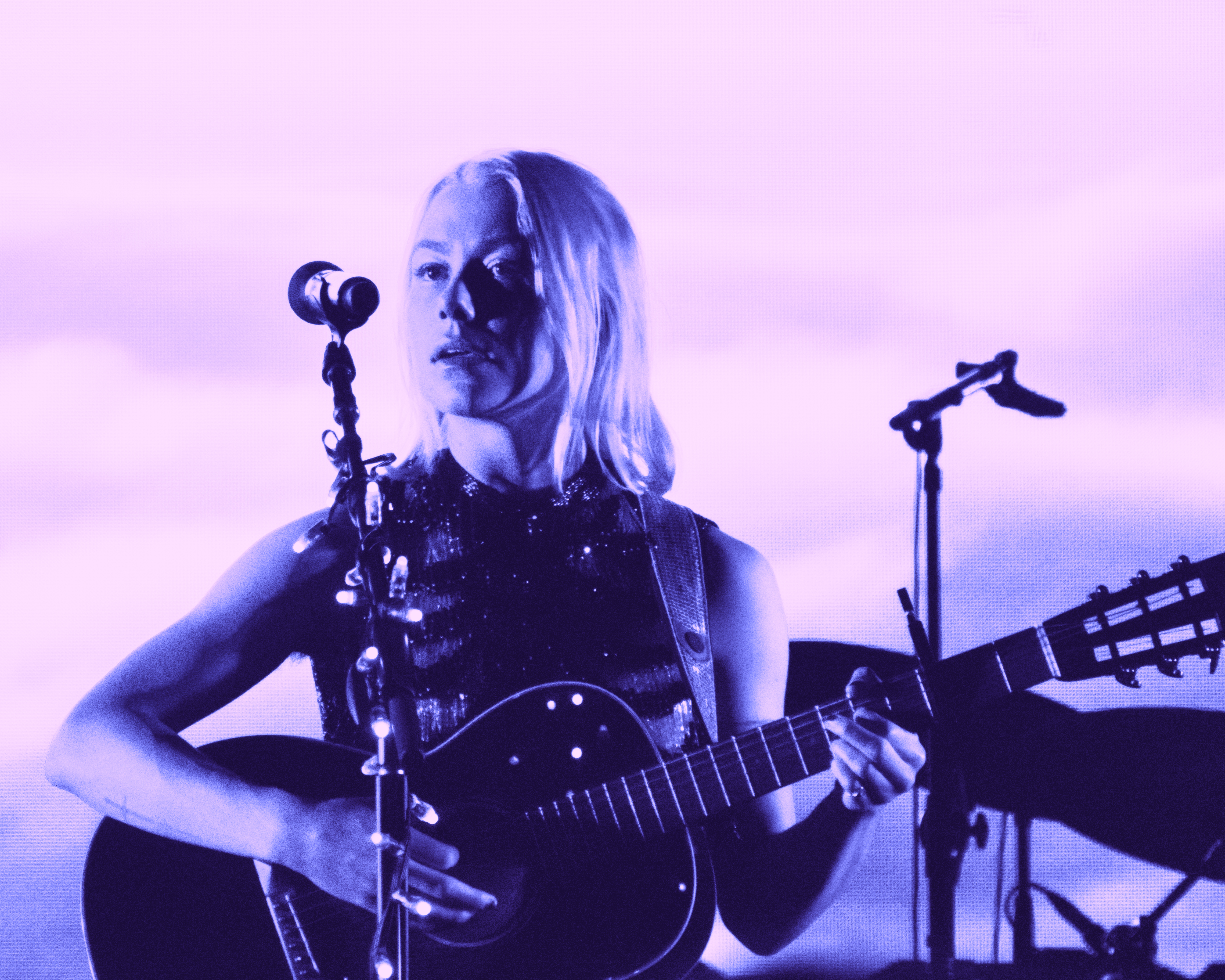
Those with a physical copy of the album - be it CD, LP, etc. - may have noticed a hidden track. The secret 17th song on the album is titled “Best Dressed” and features Isaac Wood from Black Country, New Road. It’s likely this song also relates to Bridgers’s relationship with Mescal; the song seems to revolve around the feeling of wanting in the moment, but not being able to maintain a relationship based on those initial feelings.
“It could’ve been anyone” is a devastating sentiment, but the knowledge that you picked them nonetheless makes you miss them in the end. If you get the chance to listen to the track, it’s truly Phoebe at her best.
Overall, “Lost Weekend” is another musical feat for Phoebe Bridgers. It serves as a rumination on what could’ve been if only given more time; however, it differs from past albums in its appreciation for what was. The ephemerality of life is something that is easily taken for granted, but “Lost Weekend” gives listeners a place to slow down and reflect on how far they’ve come and who got them to where they are now.